__largepreview__.webp)
HISTORY IN THE MAKING
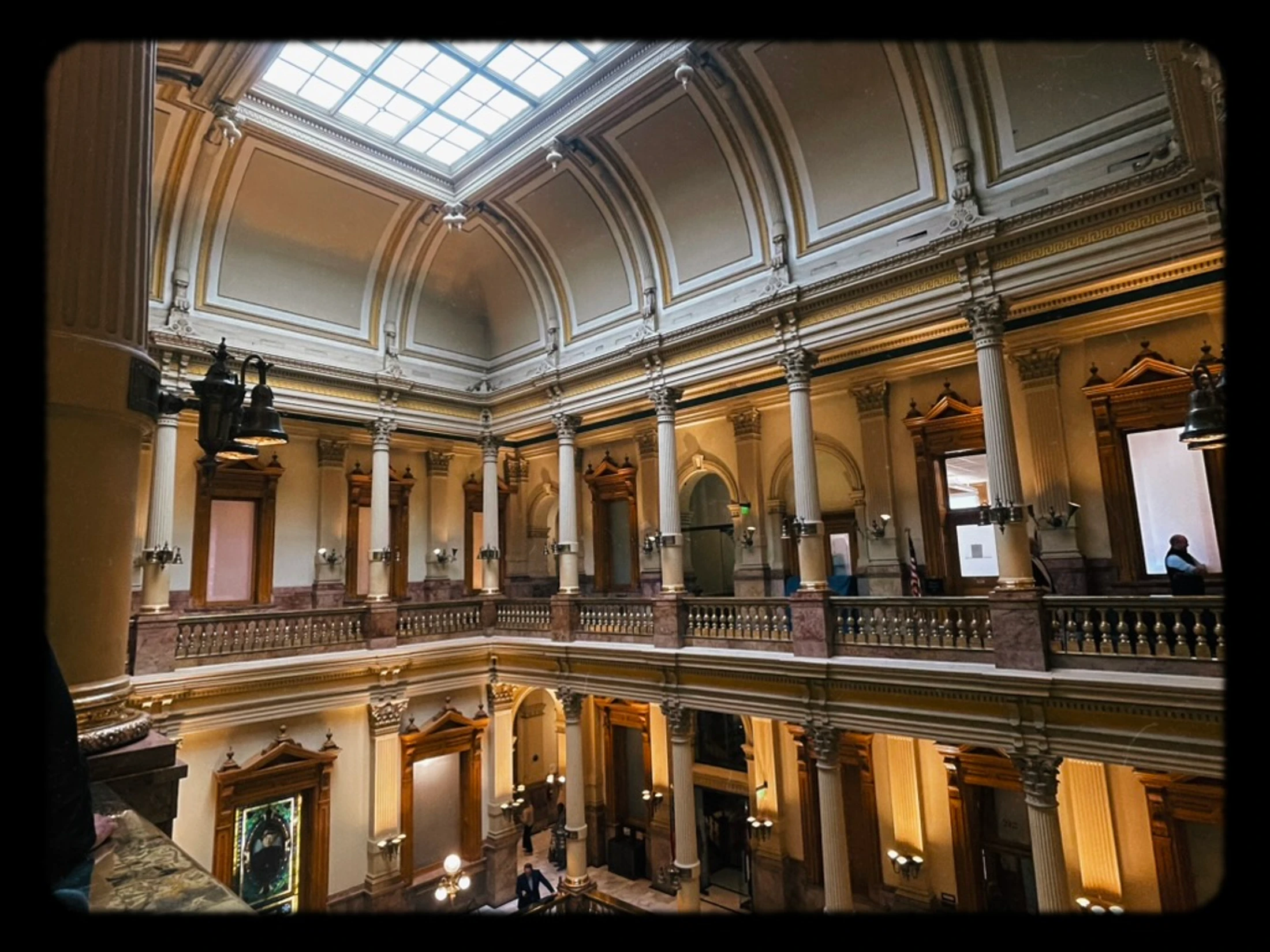
A Full-Circle Moment for Denver Revival Center
There are moments that feel greater than a single event, meeting, or opportunity.
There are moments when the prayers of one generation appear to meet the faith of another. Moments when forgotten history rises again, not so the past can be recreated, but so a new generation can recognize the responsibility placed before it.
For Denver Revival Center, this is one of those moments.
The Denver Revival Project represents more than an opportunity to gather in a new building. It is an opportunity to establish a House of Revival in the heart of Denver, inside a historic venue that has witnessed generations of worship, prayer, preaching, and Christian ministry.
As we look at the history surrounding this moment, we are filled with gratitude, humility, and expectation.
We are not merely observing history.
We believe we are standing in the middle of it.
120 Years After Azusa Street
In 2026, believers around the world are remembering the 120th anniversary of the Azusa Street Revival.
The revival began in Los Angeles in April 1906 under the leadership of William J. Seymour, an African American Holiness preacher whose humility, hunger, and life of prayer helped lead a movement that became a major catalyst for modern Pentecostalism. What began among a small group of surrendered believers eventually influenced churches, missionaries, ministries, and nations around the world.
Azusa Street reminds us that history is not always made in impressive places by famous people.
It is often made when ordinary men and women become desperate for God.
They did not have modern technology, large platforms, or carefully constructed brands. They had prayer. They had hunger. They had unity. They had a willingness to surrender their plans and make room for the Holy Spirit.
They were not attempting to become history makers.
They were attempting to become fully yielded to God.
History followed their surrender.
One hundred and twenty years later, we do not look back at Azusa Street merely with nostalgia. We look back with a question burning in our hearts:
What could God do through another generation that gives Him its complete yes?
Denver Has a Revival Story
Revival history is not limited to Los Angeles, Wales, New York, or the cities most often associated with spiritual awakening.
Denver has a revival story too.
Our city has been home to prayer movements, evangelists, missionaries, churches, ministries, radio broadcasts, Gospel campaigns, and men and women who believed Colorado could encounter the presence and power of God.
Some of their names are remembered. Many are not.
But their prayers mattered.
Their obedience mattered.
Their willingness to preach, build, give, and serve helped prepare the spiritual ground upon which future generations would stand.
Among the best-known figures connected to Denver’s revival history is Kathryn Kuhlman.
Kathryn Kuhlman’s Denver Years
Before Kathryn Kuhlman became internationally recognized for her later ministry, Denver became one of the defining early chapters of her story.
Kuhlman began her independent ministry before arriving in Colorado, but in 1933 she and her ministry partner, pianist Helen Gulliford, settled in Denver. Together, they established a ministry that continued in the city for more than five years. By the middle of the 1930s, they had established the Denver Revival Tabernacle.
The Denver years became a season of growth, preaching, evangelism, and spiritual formation for Kuhlman. The tabernacle also became the setting for her early radio program, Smiling Through, which carried the ministry beyond those physically gathered inside the building.
Denver was not simply another stop on her ministry schedule.
It was a place where her calling took root, her voice developed, and her ministry began reaching a broader audience.
Long before the great auditoriums, national broadcasts, and widely attended miracle services associated with her later years, there was a young evangelist preaching in Denver and believing that the Holy Spirit could transform lives.
That history makes what happened years later within the story of Denver Revival Center even more meaningful.
A Full-Circle Moment for Our Founders
The founders of Denver Revival Center were married in the same Denver building that had once been home to Kathryn Kuhlman’s Denver Revival Tabernacle.
At the time, they could not have fully understood how significant that connection would one day become.
It was the place where they entered a covenant with one another. Years later, God would call them to establish a ministry centered on revival, prayer, the presence of God, the preaching of the Gospel, and the work of the Holy Spirit.
What appeared to be one meaningful moment in their personal story now carries another layer of significance.
They were married inside a building connected to Denver’s revival history.
They would later establish Denver Revival Center.
Now another historic opportunity stands before them.
This is not about claiming someone else’s legacy or attempting to become another version of a previous ministry. It is about recognizing how God can weave moments together across generations in ways that only become visible with time.
What once appeared to be a wedding location now feels like part of a much larger story.
It is a full-circle moment.
Alma Temple: A Historic House in the Heart of Denver
The building now connected to the Denver Revival Project is Alma Temple, located at 1340 Sherman Street in Denver’s Capitol Hill neighborhood.
Construction of Alma Temple began in 1923 and was completed in 1937. The building was established by the Pillar of Fire movement, which Alma White founded in Denver in 1901. Its recognizable KPOF sign represents the movement’s religious radio station, which began broadcasting in 1928.
For generations, the property has been connected to public worship, preaching, broadcasting, music, and Christian gatherings. Its location near the Colorado State Capitol gives it a visible and significant position in the heart of Denver.
The building’s history is also complex. We do not endorse every belief, statement, or association connected to every person who occupied the property in previous generations. Some positions promoted by Alma White were deeply wrong and have since been publicly disavowed by the organization she founded. A professional account of history must acknowledge both the significance and the brokenness within it.
Our confidence is not in the perfection of those who came before us.
Our confidence is in the redeeming power of Jesus Christ.
Historic buildings carry human stories, and human stories are rarely without failure. But God is able to redeem places, restore what has been broken, and write new chapters marked by truth, holiness, reconciliation, and the Gospel.
Historical accounts shared with Denver Revival Center also report that Kathryn Kuhlman once preached a revival meeting at Alma Temple. We have not yet located a primary archival record confirming the exact date or details, so we share this as a reported historical connection, not as a fully documented fact.
Even with that careful distinction, the moment before us remains extraordinary.
History Is Not a Museum
We honor revival history, but we are not trying to live inside it.
History is not a museum where we admire what God once did while refusing to seek Him for what He desires to do now.
The men and women of previous generations had their assignment.
Now we have ours.
An old building cannot create revival.
Historic names cannot manufacture the presence of God.
Architecture cannot produce repentance.
A story from the past cannot replace present-day surrender.
Revival comes when people humble themselves, pray, turn from compromise, pursue holiness, preach the Gospel, love their neighbors, and make room for the Holy Spirit.
We do not want to occupy a historic house while possessing no spiritual hunger.
We do not want to speak about former generations while neglecting our own responsibility.
We do not want to celebrate old altars while refusing to prepare one in our day.
We honor the past by giving God our yes in the present.
The Denver Revival Project
The Denver Revival Project is an opportunity to establish a House of Revival in the heart of Capitol Hill, just steps from the Colorado State Capitol.
We believe this house can become a place where prayer prepares the altar, worship rises from complete surrender, and the Word of God is preached without compromise.
A house where repentance is welcomed.
A house where holiness is pursued.
A house where the lost surrender their lives to Jesus.
A house where the broken are restored, the sick are prayed for, and those living in bondage encounter freedom.
A house where disciples are formed, leaders are equipped, and believers are sent into the harvest.
A house where a generation discovers what it means to burn with holy passion for God.
But the vision does not end with a building.
Revival must reach the streets.
Revival must enter homes.
Revival must restore families.
Revival must awaken the Church.
Revival must produce evangelism, compassion, obedience, holiness, and lasting fruit.
Revival transforms hearts.
Reformation transforms what awakened hearts touch.
We are believing for people who will carry the Kingdom of God into schools, workplaces, businesses, government, ministry, media, the arts, and every sphere of influence.
We are preparing a house, but we are also preparing a people.
What We Believe Is Ahead
We believe Denver’s greatest revival story has not yet been written.
We believe the prayers of previous generations were not wasted.
We believe the spiritual hunger rising within believers across our region is not accidental.
We believe God is calling His Church back to prayer, repentance, holiness, unity, compassion, boldness, and complete surrender.
We believe people will encounter Jesus.
We believe prodigals will return home.
We believe addictions will be broken.
We believe families will be restored.
We believe the Gospel will be preached throughout our city.
We believe leaders will be equipped and sent.
We believe young people will discover their identity and purpose in Christ.
We believe churches and ministries will work together for the advancement of God’s Kingdom.
We believe revival will not remain inside four walls.
What begins at the altar will overflow into neighborhoods, schools, workplaces, government offices, businesses, and communities throughout Colorado.
We are not attempting to recreate Kathryn Kuhlman’s ministry.
We are not attempting to reproduce Azusa Street.
We are not building a monument to the past.
We are asking God for a genuine move of the Holy Spirit in our generation.
History Is Being Written Now
History is often recognized only after the moment has passed.
The people who prayed at Azusa Street did not know how far the fire would travel.
Kathryn Kuhlman could not have known how her years in Denver would be remembered generations later.
The founders of Denver Revival Center could not have known that the building where they were married would connect their personal story to Denver’s revival history.
And today, we cannot fully see everything God may do through the Denver Revival Project.
But we can pray.
We can prepare.
We can build.
We can give.
We can serve.
We can preach the Gospel.
We can make room for the presence of God.
We can give Him our complete yes.
This is more than another building opportunity.
This is a full-circle moment.
This is an invitation to honor the prayers of previous generations while accepting responsibility for our own.
This is an opportunity to prepare an altar in the heart of Denver.
This is history in the making.
Prepare the Altar. Equip the Army. Advance the Kingdom.